
Free Shipping on All Orders Over $75 • 100% Money-Back Guarantee
Coleherbals Blog Articles
The Formulator Behind Dr. Cole’s Herbal Remedies
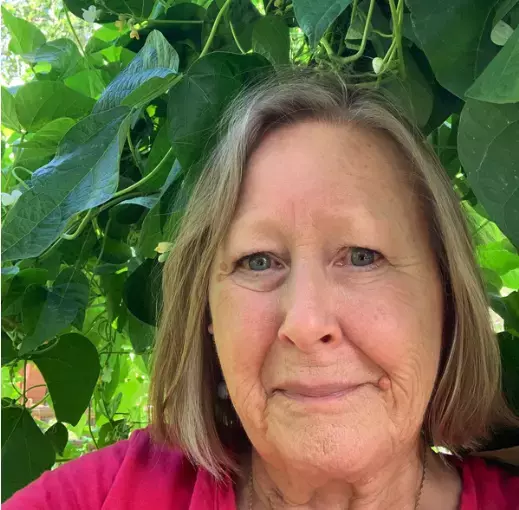
When you open a jar of balm or cream from Dr. Cole’s Herbal Remedies, you’re not just getting a product that works. You’re stepping into a story that began decades ago with a woman walking through the woods, pockets full of wildflowers she refused to throw away until she knew their names.
That woman is herbal formulator Linda Hammer. For her, plants have never been abstract ingredients. They have been companions, teachers, and in many ways, part of what kept her alive.
Meet Linda Hammer, Formulator for Coleherbals
Today, Linda Hammer is the herbal formulator behind Dr. Cole’s Herbal Remedies, also known as Coleherbals, continuing the line that began with Dr. Janell Cole.
Early Roots: Wildflowers and a First Herbal Book
Linda’s herbal path began quietly in her late teens and early twenties. She and a friend would go hiking, and she found herself drawn to the wildflowers along the trail.
“I would pick them up, take cuttings, bring them home, and start to learn to identify them,” she recalls. “In the process of doing that, I realized that many of them had medicinal properties.”
In 1976, she bought her first herbal book, Indian Herbalogy of North America by Alma Hutchens, rooted in Native American herbal practice. She leaned on that book for years and gradually built an extensive herbal library, attending conferences, trainings, and classes whenever she could.
By the time she moved to Flagstaff in 1992, herbs were already woven into her daily life. Locals introduced her to herbalist Phyllis Hogan at Winter Sun, a herbal apothecary in Flagstaff, where she learned how to make tinctures. Later, Phyllis’ daughter Denise taught her how to turn those herbs into balms.
So when Linda eventually met Dr. Janell Cole, she was not a beginner. She was a self-taught herbalist who had already spent years blending tinctures and sharing remedies long before there was a Coleherbals label.
Meeting Dr. Janell Cole
The connection with Dr. Cole did not begin in a classroom or laboratory. It began in a colonic clinic.
In 1995, Linda was diagnosed with non-Hodgkin’s lymphoma. Supporting her lymphatic and immune systems became essential. As part of her care, she began receiving colonics and lymphatic treatments.
In early 1998, Dr. Cole purchased the colonic practice Linda was already attending. By that time, Dr. Cole had completed a two-year lymphatic training program at Brigham Young University and had studied a German deep lymphatic massage technique.
At first, the relationship was simple: practitioner and patient. Over time, as treatments continued, something else developed. They talked.
Dr. Cole knew Linda was deeply interested in herbs, and they would often brainstorm during appointments. They discussed which herbs might support specific concerns, how combinations could work together, and what systems in the body might be contributing to the issue beyond the obvious symptom.
“I learned from her that I needed not to be narrow-minded,” Linda says. “Instead of just looking at one or two herbs that might be able to do something, you needed to look at everything that was out there that you’d want to consider… and look at what other areas of the body would contribute to that problem.”
Their friendship extended beyond appointments. Even after Dr. Cole moved to Safford, Linda and her husband would drive several hours to continue care and maintain the relationship.
Linda watched Dr. Cole complete her naturopathic degree, grow her practice, and eventually begin creating the topical balms many customers know today. Those balms were developed because some patients struggled to tolerate or properly absorb internal remedies. The skin offered another pathway.
A Shared Language of Herbs
By the time Dr. Cole began building her topical line, Linda had already been using tinctures for years to support her own health and others. She had even formulated an anti-nausea balm for friends undergoing chemotherapy who were not finding enough relief through conventional medications.
Within Dr. Cole’s work, Linda often remained a trusted brainstorming partner. They shared one concrete formulation together: an herbal tincture conceived during the drive home from an herb conference in New Mexico, inspired by teachers who encouraged people to keep well-chosen remedies available at home.
They discussed many potential balms and tinctures. Dr. Cole, with her formal naturopathic training, made final formulation decisions. Linda, with her practical and deeply personal herbal background, contributed a different perspective.
“I think we both tended to learn from each other,” Linda says. “I always approached things a little differently because I didn’t have the formal training like she had.”
Continuing the Work
After Dr. Cole’s passing, there were immediate questions about how the formulas would continue.
Linda’s involvement deepened gradually. At Dr. Cole’s memorial service, she met Coleherbals owner Linda Langenbacher. Not long afterward, she was asked for input on a salt formula that needed refinement.
Rather than simply adding lavender to Dead Sea salt, Linda asked to review the ingredient list from the Stress Relief Balm and studied it carefully. She then selected powdered herbs that could carry that same intention into a soak format. It was her first quiet but meaningful contribution to the evolving line.
Later, she was asked to create a fully documented manufacturing process for the Hemorrhoid Balm. Working from the original formula, she produced a small test batch and recorded each step carefully, including timing, temperatures, and order of operations, so the product could be reproduced consistently in a lab setting.
When additional formulas needed to be rebuilt or refined, Linda returned to research. Many of Dr. Cole’s original blends dated back to the late 1990s and early 2000s. Herbal research and Linda’s own experience had continued to evolve. For each product she revisited, she evaluated traditional uses, reviewed current herbal literature, assessed ingredient interactions, and examined real-world performance before finalizing adjustments.
“My formulas didn’t look exactly like Janell’s,” she explains. “But I went back to research and looked at what we know now.”
What began as a short-term collaboration became ongoing stewardship of Dr. Cole’s Herbal Remedies formulas.
“And here I am, over five years later,” she says.
How Linda Approaches Herbal Formulation Today
Behind every balm and cream is a deliberate process.
Research first. Linda begins by reviewing traditional sources and modern herbal research, approaching each formula as though she is starting fresh.
Interaction and proportion checks. She evaluates how herbs work together, ensuring balance so one ingredient does not overpower or counteract another.
Whole-system thinking. Following Dr. Cole’s example, she considers not just the symptom, but the broader systems involved.
Documented process. Every formula is written and tested with clear production steps so it can be reproduced consistently.
Ongoing education. Linda continues studying herbs, carrier oils, and essential oils to refine and improve her formulations. It is slow, careful work. For Linda, that is the point.
The Formulas She Is Most Proud Of
After nearly fifty years of herbal work, if you include tinctures, choosing favorites is not simple.
Two formulas rise to the top: the Skin Repair Balm and Cream, and the Lymphatic Support Cream.
The Skin Repair formulas evolved from Dr. Cole’s original SOS balm. When Linda revisited the blend, she reviewed updated research and expanded the herbal profile to further support skin resilience and recovery.
The Lymphatic Support Cream is especially personal. Dr. Cole originally created a lymphatic cream to support Linda’s own health. After those early bottles were used up, Linda returned to research and rebuilt the formula with herbs traditionally associated with lymphatic movement and support.
One experience still stands out. A woman living with post-surgical lymphedema began using the cream and found enough benefit to continue ordering it, eventually sharing it with others facing similar challenges.
“That made me feel good,” Linda says. “That I could develop something that would be very useful for other people.”
What People Often Misunderstand
“The biggest one is they expect immediate relief,” Linda says.
Some herbal topicals can provide quick comfort. Many require consistent application.
She encourages customers to:
-
Test on a small patch of skin first.
-
Apply to clean, dry skin.
-
Reapply as needed.
Herbal balms and creams are not one-time solutions. They are part of a routine.
A Formulator Who Never Stops Learning
Perhaps most important to Linda is that she continues learning.
“I take what I do very seriously,” she says. “And I continue to do ongoing education.”
As she expanded into skin care, she studied carrier oils and their role in supporting the skin barrier. She pursued additional education on essential oil safety and formulation.
Linda said, “I’m continuously educating myself so that I can come up with the best formulations possible.” That ongoing study builds on decades of lived experience: wildflower hikes, early herbal books, tincture making, balm crafting, and years of conversation with Dr. Cole about seeing the whole person.
Today, when you pick up a Coleherbals product, you are not simply buying a preserved recipe. You are holding work that began with Dr. Cole and continues through careful research, refinement, and hands-on formulation — guided by someone who still studies, tests, and adjusts so each jar makes practical sense for real people.